

How Much Does the International Space Station Cost? Funding, Operations, and Economic Impact
Explore the multi-billion dollar investment behind the International Space Station, its operational costs, and the economic impact of human spaceflight.
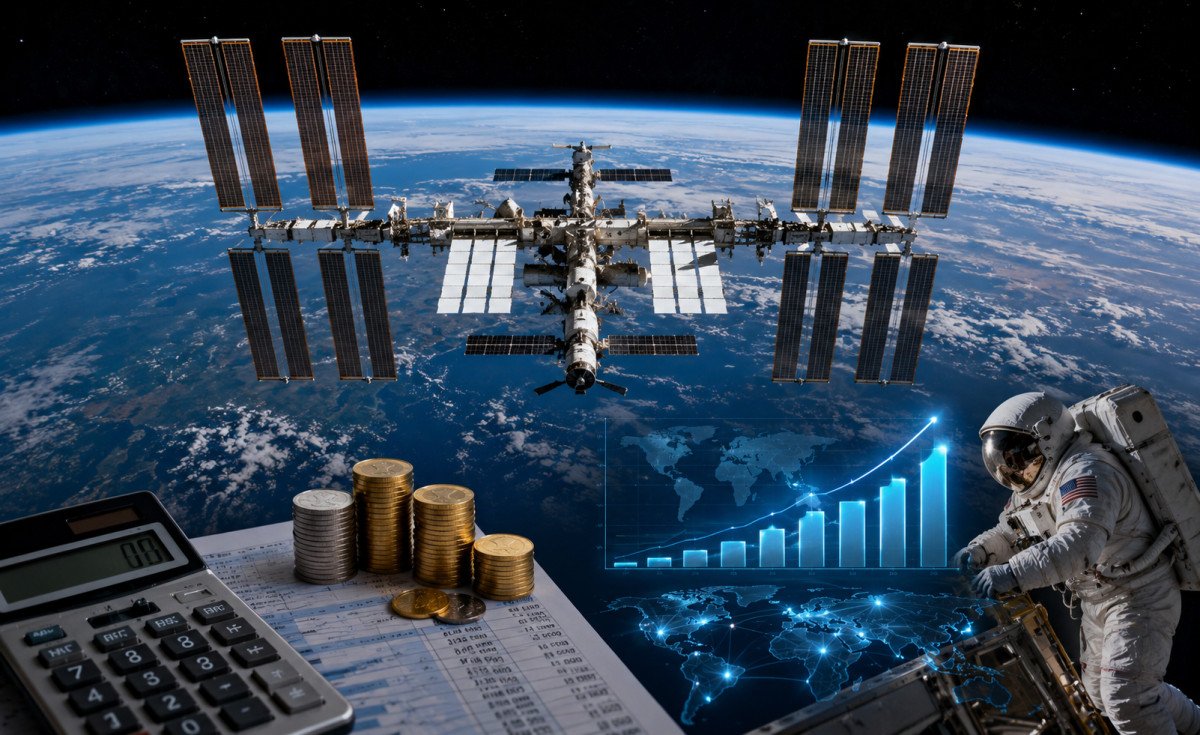
The International Space Station (ISS) is often called one of humanity's greatest engineering achievements. Orbiting approximately 400 kilometers (250 miles) above Earth, this massive laboratory has been continuously inhabited since 2000 and has hosted astronauts from around the world. It serves as a center for scientific research, technological innovation, and international cooperation.
But one question continues to spark curiosity among space enthusiasts and taxpayers alike: How much did the International Space Station actually cost?
The answer isn't as straightforward as a single number. The ISS was built over decades, funded by multiple countries, and supported through countless launches, upgrades, and operational missions. When all expenses are considered, it becomes one of the most expensive projects ever undertaken by humanity.
Let's take a closer look at the true cost of the International Space Station, what that money paid for, and whether the investment has been worth it.
The Total Cost of Building the International Space Station
Estimating the exact cost of the ISS is challenging because it was never funded by a single organization. Instead, the station was developed through a partnership involving several major space agencies:
- NASA (United States)
- Roscosmos (Russia)
- European Space Agency (ESA)
- Japan Aerospace Exploration Agency (JAXA)
- Canadian Space Agency (CSA)
Most estimates place the total cost of the ISS at more than $150 billion. Some calculations suggest the overall investment may be even higher when inflation, research expenses, launch costs, and long-term operations are fully included.
The United States has contributed the largest share of funding. NASA alone has invested well over $100 billion since the project began in the 1990s. International partners have contributed billions more through hardware development, launch services, research facilities, and ongoing operational support.
While the price tag is enormous, it's important to remember that the ISS wasn't built all at once. Construction took more than a decade and involved dozens of missions, thousands of engineers, and contributions from multiple countries.
What Exactly Did the Money Pay For?
When people hear that the ISS cost over $150 billion, they often imagine the money was spent solely on building the station itself. In reality, the budget covered much more than construction.
Designing and Manufacturing Space Modules
The ISS consists of multiple interconnected modules, each designed for specific purposes such as research, living quarters, storage, and operations.
Some of the most important modules include:
- Zarya Functional Cargo Block
- Unity Node
- Destiny Laboratory
- Columbus Laboratory
- Kibo Japanese Experiment Module
- Harmony Node
- Tranquility Module
Each section required years of planning, testing, and manufacturing before it could be launched into orbit.
Because these components had to survive the harsh environment of space, engineering standards were far more demanding than those used for Earth-based structures.
Launching Equipment Into Space
Getting equipment into orbit is incredibly expensive.
Every module, solar panel, truss segment, scientific instrument, and supply shipment had to be launched aboard rockets or space shuttles.
During the station's construction phase, NASA's Space Shuttle program played a critical role in transporting large components into orbit.
Each shuttle mission cost hundreds of millions of dollars, and many flights were dedicated specifically to assembling the ISS.
Assembly in Orbit
Unlike a building constructed on Earth, the ISS had to be assembled piece by piece in space.
Astronauts performed numerous spacewalks to connect modules, install equipment, attach solar arrays, and configure systems.
This complex assembly process required years of planning and coordination between international teams.
The Ongoing Cost of Operating the ISS
Building the station was only the beginning.
Keeping humans alive in space around the clock requires a significant annual budget.
NASA currently spends roughly $3 billion to $4 billion per year on ISS operations.
These ongoing expenses cover a wide range of activities.
Transportation of Astronauts
Astronauts need reliable transportation to and from the station.
For many years, NASA relied on Russian Soyuz spacecraft following the retirement of the Space Shuttle program.
Today, commercial spacecraft such as SpaceX's Crew Dragon play a major role in crew transportation.
Funding these missions remains a significant operational expense.
Cargo and Resupply Missions
The ISS constantly requires supplies.
Regular cargo missions deliver:
- Food
- Water
- Oxygen
- Scientific equipment
- Replacement parts
- Medical supplies
Without these shipments, long-term human habitation in space would be impossible.
Commercial companies now handle many of these missions, reducing costs compared to traditional government-led approaches.
Ground Control Operations
The station may orbit Earth, but thousands of professionals support it from the ground.
Mission control teams monitor:
- Life support systems
- Communications
- Navigation
- Scientific experiments
- Emergency procedures
Operations centers in the United States, Russia, Europe, Japan, and Canada work together around the clock to ensure the station remains safe and productive.
Maintenance and Upgrades
Like any aging facility, the ISS requires regular maintenance.
Engineers must continuously replace aging components, repair equipment, update software, and improve critical systems.
Recent upgrades have included new solar arrays that help increase power generation and extend the station's useful lifespan.
Why Do Governments Continue Funding the ISS?
Given its enormous cost, many people wonder whether the station is worth the investment.
The answer depends on how you measure value.
If the ISS were judged solely by direct financial return, the numbers might seem difficult to justify.
However, the station generates benefits that extend far beyond traditional profit calculations.
Scientific Discoveries That Benefit Life on Earth
One of the primary reasons the ISS exists is scientific research.
The microgravity environment allows scientists to conduct experiments that simply cannot be performed on Earth.
Medical Research
Researchers use the station to study how the human body behaves in space.
This research has improved our understanding of:
- Bone density loss
- Muscle deterioration
- Cardiovascular health
- Immune system function
Findings from these studies have contributed to advances in healthcare and may help develop treatments for various medical conditions.
Drug Development
Scientists have used the ISS to grow protein crystals with greater precision than is possible on Earth.
These studies support pharmaceutical research and can improve drug design processes.
Materials Science
Microgravity allows researchers to develop and test materials in unique ways.
Scientists have studied:
- Advanced alloys
- Semiconductors
- Manufacturing techniques
- Fluid behavior
Many of these discoveries have practical applications in industries ranging from electronics to construction.
The ISS Helped Create the Modern Commercial Space Industry
One of the most significant economic impacts of the ISS isn't found aboard the station itself.
Instead, it's found in the rapid growth of the private space sector.
To reduce costs and improve efficiency, NASA increasingly partnered with private companies for cargo delivery and crew transportation.
This shift helped create opportunities for companies such as:
- SpaceX
- Boeing
- Blue Origin
- Northrop Grumman
As a result, thousands of high-skilled jobs have been created in engineering, manufacturing, software development, and aerospace research.
The commercial space economy that exists today owes much of its growth to the infrastructure and demand created by the ISS program.
A Symbol of International Cooperation
Beyond science and economics, the ISS represents something equally important: international collaboration.
The station was built and operated by countries that often have competing political interests.
Yet for more than two decades, these nations have worked together toward a common goal.
Engineers, scientists, and astronauts from different cultures and backgrounds have shared knowledge, resources, and expertise.
This level of cooperation is rare on such a large scale.
The ISS demonstrates what humanity can achieve when nations focus on shared objectives rather than differences.
What Happens After the ISS?
The International Space Station is not expected to remain in orbit forever.
Current plans call for retirement near the end of the decade.
When that time comes, the station will undergo a carefully managed deorbit process designed to safely guide its remains into a remote region of the Pacific Ocean.
Preparing for this final phase is already part of long-term budget planning.
At the same time, NASA and its partners are investing in the next generation of low-Earth orbit stations.
Unlike the ISS, many future stations are expected to be commercially owned and operated.
Companies are developing private space stations that could host research projects, manufacturing operations, and astronaut missions.
The goal is to maintain a permanent human presence in orbit while reducing the financial burden on governments.
The Real Value of the International Space Station
Looking only at the price tag, the ISS appears incredibly expensive.
More than $150 billion is a staggering investment by any standard.
Yet focusing solely on cost overlooks the broader impact of the project.
The station has expanded scientific knowledge, advanced medical research, encouraged technological innovation, supported the growth of the commercial space industry, and strengthened international partnerships.
Perhaps most importantly, it has provided valuable experience for future missions to the Moon, Mars, and beyond.
The International Space Station is more than a laboratory orbiting Earth. It is a testing ground for humanity's future in space.
As governments and private companies prepare for the next chapter of exploration, the lessons learned from the ISS will continue shaping space travel for decades to come.
The true value of the station cannot be measured only in dollars. It can also be measured in discoveries, opportunities, and the foundation it has created for the future of human space exploration.
What's Your Reaction?
 Like
0
Like
0
 Dislike
0
Dislike
0
 Love
0
Love
0
 Funny
0
Funny
0
 Wow
0
Wow
0
 Sad
0
Sad
0
 Angry
0
Angry
0

We focus on content that stays useful over time. Instead of chasing short-lived trends, we create evergreen articles, guides, tips, and educational resources designed to deliver long-term value. Our team works to ensure every article is clear, reliable, and helpful for readers seeking trustworthy information online










Comments (0)