

How to Write a Resume That Gets Interviews: A Complete Guide for Modern Job Seekers
Master the art of resume writing with this comprehensive, step-by-step blueprint designed to elevate your professional profile and pass ATS screening filters.
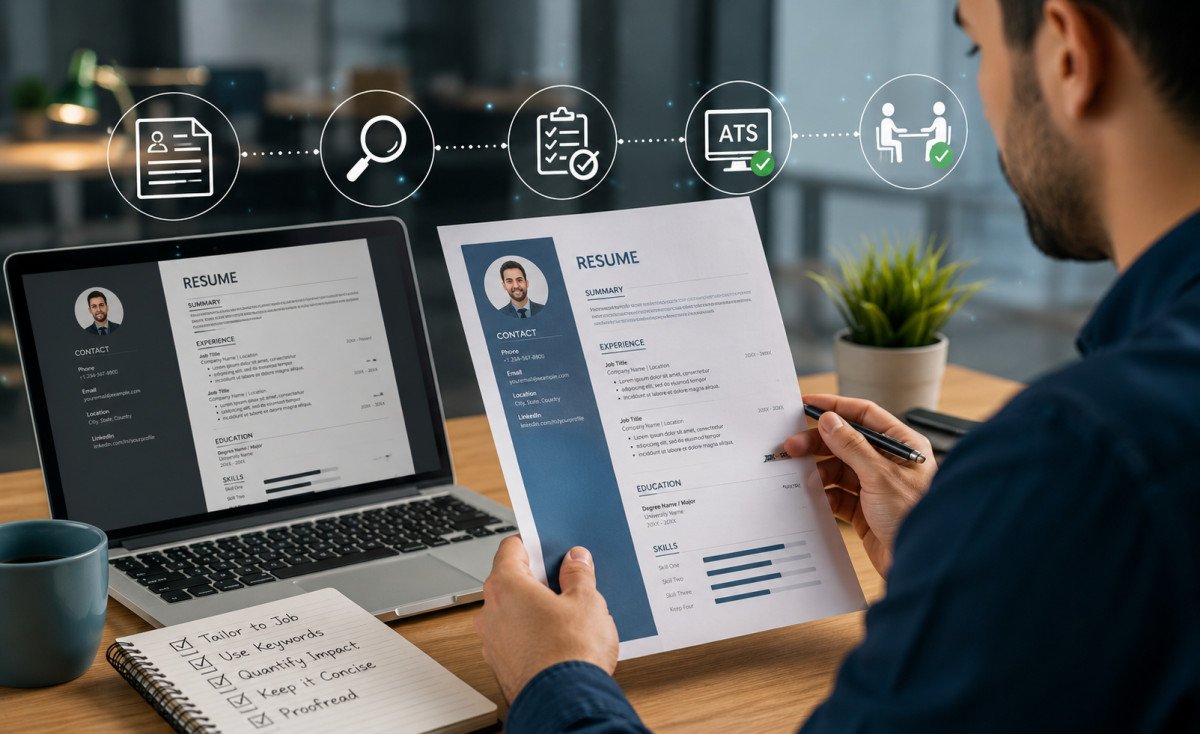
Finding the right job is challenging enough. The last thing you want is for your resume to be the reason you miss out on opportunities. Yet many qualified candidates are rejected before a recruiter even reads their application. In many cases, the problem isn't a lack of experience or skills—it's an ineffective resume.
Today's hiring process looks very different from what it did a decade ago. Before a hiring manager reviews your application, it often passes through Applicant Tracking Systems (ATS), software designed to scan and filter resumes based on specific criteria. Because of this, your resume needs to appeal to both technology and human recruiters.
A well-written resume is more than a document listing your work history. It's a personal marketing tool that highlights your value, demonstrates your achievements, and shows employers why you're the right fit for the role.
This guide will walk you through the essential elements of creating a professional resume that stands out in a competitive job market.
Why Your Resume Matters More Than Ever
Employers often receive hundreds of applications for a single position. Recruiters may spend only a few seconds reviewing each resume before deciding whether to move forward.
That means your resume needs to accomplish several goals quickly:
- Capture attention immediately
- Demonstrate relevant qualifications
- Show measurable achievements
- Pass ATS screening systems
- Encourage recruiters to schedule an interview
A strong resume doesn't simply tell employers what you did. It shows the impact you made and the results you delivered.
Choosing the Right Resume Format
Before you begin writing, select a format that best represents your experience and career path.
Chronological Resume Format
This is the most commonly used format and is preferred by many employers.
It lists your work experience in reverse chronological order, starting with your most recent position.
This format works best for:
- Professionals with consistent work history
- Candidates with steady career progression
- Applicants staying within the same industry
Functional Resume Format
A functional resume focuses more on skills than work history.
It can be useful for:
- Career changers
- Individuals returning to work after a long break
- Candidates with employment gaps
However, many recruiters prefer chronological resumes because they provide a clearer employment timeline.
Hybrid Resume Format
A hybrid resume combines skills and work experience.
This format works well for professionals who want to highlight both their expertise and career achievements.
Regardless of the format you choose, keep the design simple, clean, and easy to read.
Create a Strong Professional Summary
The professional summary is one of the first sections recruiters see.
Instead of writing an outdated objective statement about what you want from an employer, focus on what you bring to the table.
A strong summary should include:
- Years of experience
- Core skills
- Industry expertise
- Major accomplishments
- Career strengths
Example
"Results-driven marketing professional with 7+ years of experience developing digital campaigns that increased lead generation by 45%. Skilled in content marketing, SEO strategy, and marketing analytics with a proven record of improving customer engagement and business growth."
This approach immediately communicates value to potential employers.
Focus on Achievements Instead of Responsibilities
One of the biggest resume mistakes is listing job duties without showing results.
Many candidates write statements like:
- Responsible for managing customer accounts
- Handled social media marketing
- Managed project teams
These descriptions don't tell employers how effective you were.
Instead, focus on achievements.
Use the Action + Task + Result Formula
Start with a strong action verb, describe what you did, and explain the outcome.
For example:
- Increased website traffic by 60% through targeted SEO campaigns.
- Reduced customer response times by 35% by implementing a new support workflow.
- Managed a team of 12 employees and improved project completion rates by 25%.
Numbers and measurable results make your accomplishments more convincing and credible.
How to Make Your Resume ATS-Friendly
Many companies use Applicant Tracking Systems to filter applications before a recruiter sees them.
If your resume isn't optimized for ATS software, it may never reach a hiring manager.
Use Keywords from the Job Description
Carefully review the job posting and identify recurring terms.
Look for:
- Technical skills
- Industry-specific terminology
- Certifications
- Software knowledge
- Required competencies
For example, if a job description repeatedly mentions:
- Project management
- Data analysis
- Customer relationship management
Make sure those terms appear naturally within your resume when relevant to your experience.
Avoid Keyword Stuffing
Adding keywords excessively can make your resume difficult to read.
The goal is to integrate relevant terms naturally while maintaining a professional tone.
Use Standard Headings
ATS software recognizes common section titles such as:
- Professional Summary
- Work Experience
- Skills
- Education
- Certifications
Avoid creative headings that may confuse resume-scanning software.
Build an Effective Work Experience Section
The experience section is often the most important part of a resume.
Recruiters want to understand:
- Where you've worked
- What you've accomplished
- How your experience relates to the role
For each position include:
- Job title
- Company name
- Employment dates
- Key accomplishments
Prioritize Relevant Experience
Not every responsibility deserves equal attention.
Focus on achievements that directly relate to the position you're applying for.
For example:
A software developer should highlight:
- Programming languages
- Project outcomes
- Technical solutions
A sales professional should emphasize:
- Revenue growth
- Client acquisition
- Account management success
Tailoring your experience section increases your chances of landing interviews.
Showcase Skills Strategically
Many recruiters scan the skills section before reading the entire resume.
Make this section easy to navigate.
Technical Skills
Examples include:
- Excel
- Python
- Google Analytics
- Salesforce
- SQL
- Adobe Creative Suite
Professional Skills
Examples include:
- Team leadership
- Communication
- Problem-solving
- Project management
- Strategic planning
Certifications
If applicable, include certifications such as:
- PMP
- Google Analytics Certification
- AWS Certification
- HubSpot Certification
- CPA
Organizing skills into categories improves readability and helps ATS systems identify relevant qualifications.
Present Your Education Effectively
Your education section should be clear and concise.
Include:
- Degree name
- Institution
- Graduation year
Recent graduates may also include:
- Academic achievements
- Relevant coursework
- Research projects
- Internships
For experienced professionals, education should generally take a secondary role behind work accomplishments.
Keep Resume Design Clean and Professional
Good design improves readability without distracting from content.
Best Formatting Practices
- Use professional fonts such as Calibri, Arial, or Helvetica.
- Maintain consistent spacing throughout the document.
- Use bullet points for achievements.
- Keep margins balanced.
- Use bold text sparingly for emphasis.
What to Avoid
- Graphics
- Charts
- Icons
- Multiple columns
- Excessive colors
Many ATS platforms struggle to process complex formatting.
Simple resumes often perform better than visually elaborate designs.
Customize Your Resume for Every Application
One resume should not be used for every job.
Different employers prioritize different qualifications.
Before applying:
- Review the job description carefully.
- Adjust keywords where appropriate.
- Highlight the most relevant accomplishments.
- Emphasize matching skills and experience.
Even small customizations can significantly improve interview chances.
Proofread Before You Submit
A single spelling or grammar error can create a negative impression.
Before sending your resume:
Read It Aloud
Reading aloud helps identify awkward phrasing and mistakes that are easy to overlook.
Use Multiple Review Methods
- Spell check tools
- Grammar checkers
- Peer reviews
- Professional resume reviews
Verify Accuracy
Double-check:
- Dates
- Job titles
- Contact information
- Company names
Accuracy demonstrates professionalism and attention to detail.
Keep Your Resume Updated
Many professionals only update their resume when they begin searching for a job.
This often leads to forgotten achievements and rushed edits.
Instead, update your resume regularly.
Add:
- New skills
- Certifications
- Promotions
- Major accomplishments
- Successful projects
Keeping your resume current ensures you're always prepared for new opportunities.
Conclusion
A successful resume is not simply a record of your employment history. It is a strategic document designed to showcase your value and persuade employers to learn more about you.
By choosing the right format, highlighting measurable achievements, optimizing for ATS systems, and tailoring your content to each role, you can dramatically improve your chances of getting interviews.
Remember, recruiters aren't just looking for someone who can perform the job. They're looking for someone who can deliver results. Your resume should clearly demonstrate that you are that person.
Frequently Asked Questions
What's Your Reaction?
 Like
0
Like
0
 Dislike
0
Dislike
0
 Love
0
Love
0
 Funny
0
Funny
0
 Wow
0
Wow
0
 Sad
0
Sad
0
 Angry
0
Angry
0

We focus on content that stays useful over time. Instead of chasing short-lived trends, we create evergreen articles, guides, tips, and educational resources designed to deliver long-term value. Our team works to ensure every article is clear, reliable, and helpful for readers seeking trustworthy information online
















Comments (0)